 FREE SHIPPING ON ORDERS OVER $199!


Toyota Solara Convertible Top Leaks Solved
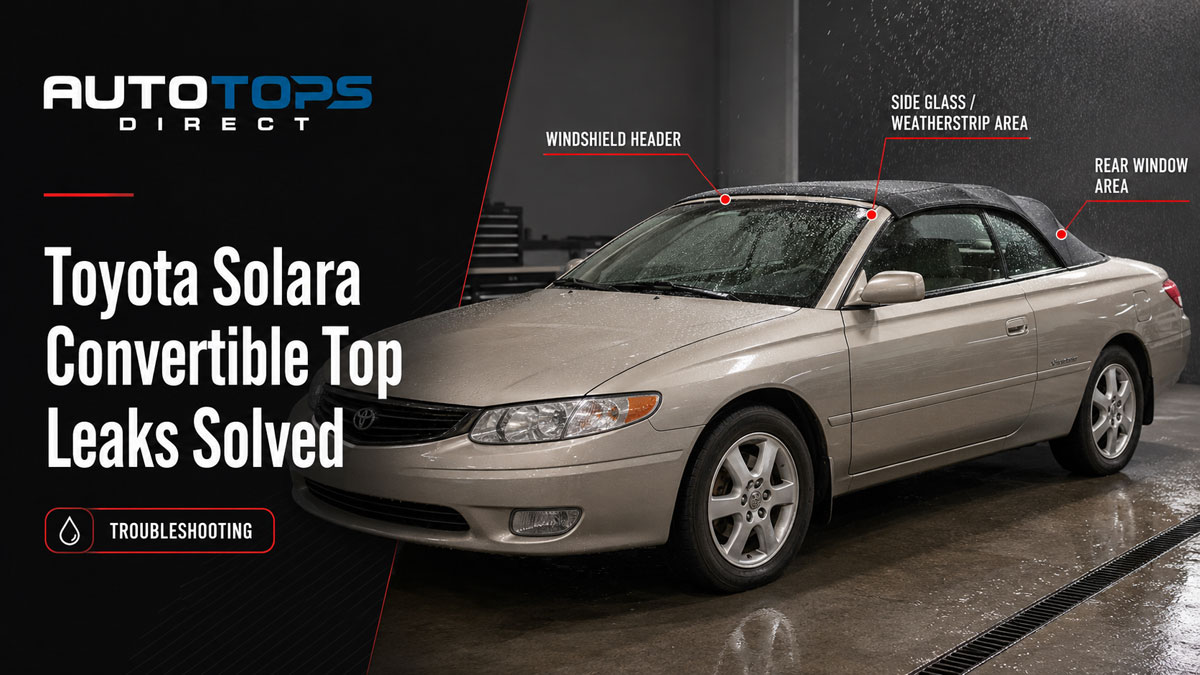
A leaking Toyota Solara convertible can send water to the A-pillars, headliner area, rear quarters, floor, or behind the seats, but the wet spot is not always the entry point. The roof has to seal at the windshield header, side rails, side glass, rear quarters, drain system, and rear window while also folding and unfolding without disturbing those sealing surfaces.
The most reliable way to solve Toyota Solara convertible top leaks is to diagnose the exact leak path before replacing parts. That is especially important because the first-generation 2000-2003 Solara convertible and the 2004-2009 model use different roof designs and adjustment procedures. A fix that applies to an early Solara may not be correct for a later car.
This guide separates the common leak zones, explains what Toyota service information reveals about top alignment and water testing, and helps you decide when the issue is a seal, adjustment, drain, window bond, or aging convertible top.
Start By Identifying Which Solara Generation You Have
Any useful guide to Toyota Solara convertible top leaks should begin with the model year. Auto Tops Direct separates Solara replacement tops into 2000-2003 and 2004-2009 applications because the roof construction, material options, and replacement components are not identical.
2000-2003 Solara Convertibles Have Their Own Fitment And Adjustment Concerns
Toyota’s Technical Information System is the authoritative source for year-specific repair manuals and service bulletins. For early Solara leak complaints, header alignment and locating-pin contact are useful diagnostic areas, but any adjustment should follow the procedure for the exact model year.
That does not mean every early Solara leak is caused by the same adjustment. It does mean header alignment is a documented diagnostic area on that generation and should be checked before someone replaces the fabric simply because water enters near the windshield.
2004-2009 Solara Convertibles Use A Different Roof System
The second-generation Solara convertible has a different top assembly, side-rail sealing system, weatherstrips, and water-management components. Toyota’s official 2008 Solara manuals page is the right starting point for operating precautions, while detailed adjustments and leak checks belong in factory service information.
If you own a 2004-2009 car, avoid applying a first-generation adjustment procedure found on a forum or video without verifying that it matches your roof.
Match Replacement Parts To The Exact Year Range
Auto Tops Direct lists separate 2000-2003 Toyota Solara convertible tops and 2004-2009 Toyota Solara convertible tops. If your diagnosis eventually leads to replacement, use the correct year range before comparing colors, materials, or window sections.
A top that is close in appearance but wrong in pattern or sealing geometry can create new fit problems even if the material quality is excellent.
Reproduce The Leak With A Controlled Water Test
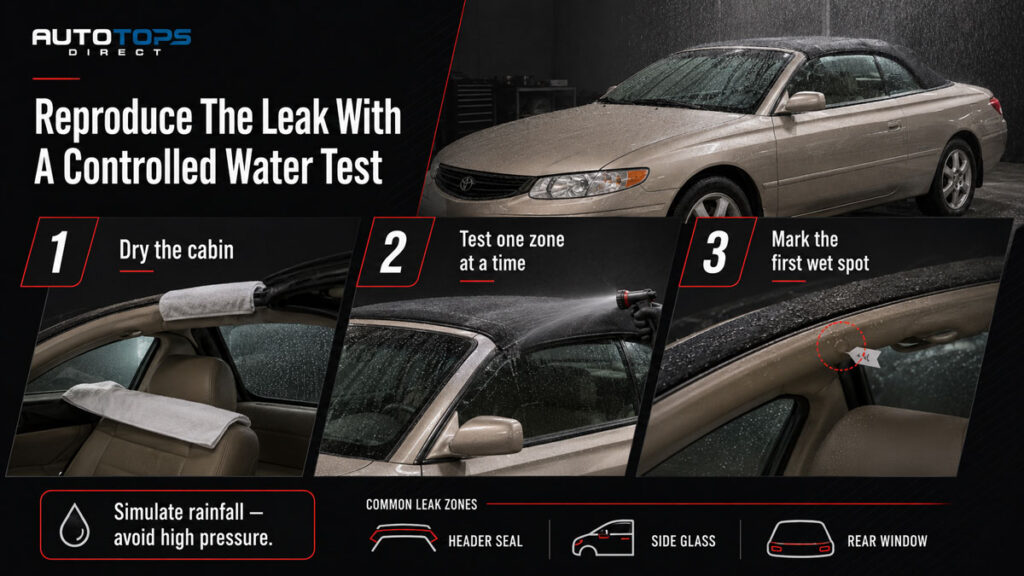
The best first step for Toyota Solara convertible top leaks is to reproduce the leak in one area at a time. Toyota service information for later Solara convertibles specifically calls for checking water leaks after top installation and correcting the relevant sealing or glass-adjustment procedure when a leak is found For context on water management, Are convertible tops waterproof? explains why controlled testing is more useful than soaking the entire roof at once..
| Leak Zone | What To Check | Likely Corrective Path |
| Header/front latches | Seal compression, pin alignment, and equal latch effort | Clean or replace the seal, or follow the model-year alignment procedure |
| Side windows | Daylight, weak paper-pull resistance, and rolled seal lips | Correct glass or weatherstrip position |
| Roof rails | Gaps where the weatherstrips meet | Re-seat or replace damaged rail seals |
| Drain trough/top well | Debris, overflow, or damp rear carpet | Clear or repair the water-management path |
| Rear window | Lifting fabric, staining, or bond separation | Rebond, replace the window section, or replace the full top based on material age |
Dry The Cabin And Mark The First Wet Point
Before testing, dry the headliner edges, A-pillars, side trim, rear quarters, carpet, and seat-belt areas. Put dry paper towels or absorbent cloth along likely leak paths.
The first new wet spot matters more than the final puddle. Water can travel along a roof rail or trim panel before it becomes visible.
Use Low-Pressure Water And Test One Zone At A Time
Start at the lower rear corner, then work forward and upward through the side seals, side glass, windshield header, and rear window perimeter. Give each area time to drain before moving on.
Toyota’s 2004 Solara owner guidance cautions against spraying water at the side windows and top seals in a way that forces water into the vehicle. That is useful advice for leak testing too. Simulate rainfall rather than aiming a concentrated pressure stream directly into the seals.
Repeat The Test After Any Adjustment Or Repair
If you change a seal position, adjust the glass, clear a drain, or repair a window bond, repeat the same test in the same order. A repair is not complete because the area “looks tighter.” It is complete when the original leak no longer reproduces under the same conditions.
Check The Windshield Header And Front Latches
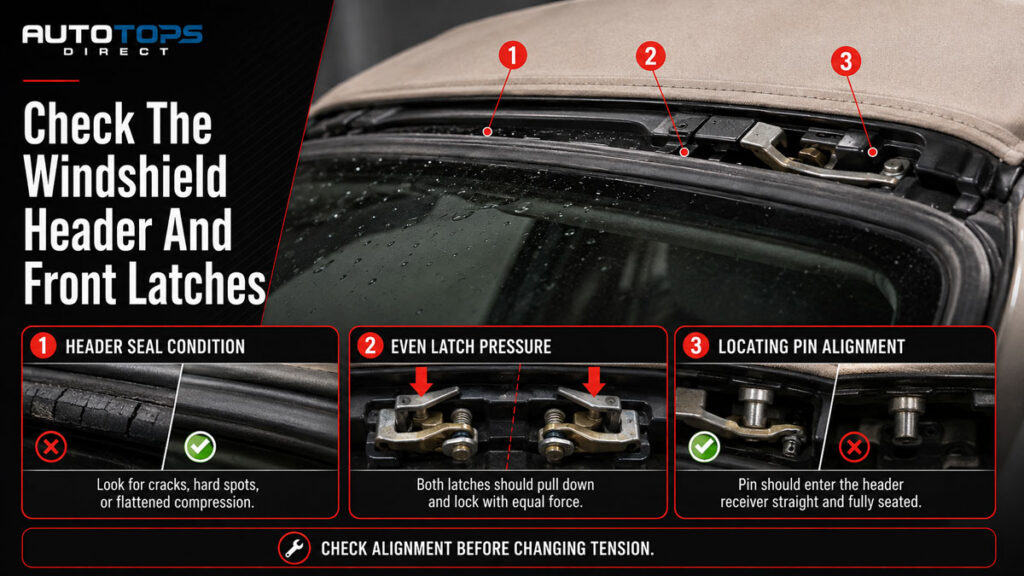
A significant number of Toyota Solara convertible top leaks begin around the windshield header because the top must pull down evenly against a long weatherstrip while both front latches maintain consistent pressure.
Inspect The Header Seal For Compression Damage
Open the top and inspect the rubber across the windshield frame. Look for hard spots, flattening, cracks, tears, dirt embedded in the sealing face, and corners that no longer spring back.
Clean the seal gently before deciding it has failed. Dirt or hardened residue can prevent full contact and create a narrow water path.
Compare Latch Effort From Side To Side
When you close the top, both latch points should feel reasonably similar. If one side needs excessive force while the other feels loose, the top may not be meeting the header squarely.
Do not simply tighten the loose side. Toyota’s early Solara service bulletin shows that roof alignment can affect water sealing, and the later service information also warns that certain roof adjustments can reduce sealing pressure if changed incorrectly.
Check The Locating Pins Before Changing Adjustments
On the 2000 model, Toyota documented a procedure for checking how the top locating pin enters the header receiver before adjusting the up-stops. That is a useful diagnostic principle even if your exact model year uses different hardware: verify alignment before changing tension.
If the top lands noticeably off-center, have the mechanism inspected rather than forcing the latch to pull it into place.
Inspect Side Glass Contact With The Roof Weatherstrips
Many Toyota Solara convertible top leaks are really glass-to-weatherstrip problems. The side windows and quarter windows have to contact the roof seals with the right position and pressure for the cabin to stay dry.
Look For Daylight Or Uneven Contact
With the top raised and the windows closed, inspect the entire glass-to-seal line. Look for a corner that barely touches, a rubber lip that folds away from the glass, or a section that appears much more compressed than the rest.
If the leak occurs only at highway speed or during wind-driven rain, a marginal glass seal becomes even more likely.
Use A Paper Pull Test As A Comparison Tool
Close the glass on a narrow strip of paper at several points along the weatherstrip. You should feel resistance when pulling it out. A location that releases with almost no resistance deserves closer inspection.
This is not a factory calibration method. It is a simple way to compare seal compression around the opening before you move any adjuster.
Do Not Change Roof Or Window Adjustments Randomly
Toyota’s later Solara service information cautions that changing certain roof adjustments can loosen the seal between the weatherstrip and glass and create water leakage. That is a strong reason to avoid trial-and-error adjustment.
If the glass is obviously misaligned, use the correct service procedure or have a convertible-top specialist perform the adjustment.
Check The Roof-Side Weatherstrips And Rail Seams
A proper inspection for Toyota Solara convertible top leaks should include the seals that run along the folding roof rails. These seals move every time the top opens, so clips, joints, and molded corners can loosen or deform with age.
Inspect Every Weatherstrip Joint
Pay special attention where the front, center, and rear rail weatherstrips meet. Water can enter at a joint even when the long straight sections look perfect.
Look for a step between seals, hardened rubber, gaps at the ends, or a section that has pulled away from its retainer.
Make Sure The Seal Lip Is Facing The Correct Direction
A weatherstrip can remain attached but twist so the glass contacts the wrong part of the seal. Compare the suspect area to the other side of the car and gently restore the lip if it has rolled.
If the rubber immediately returns to the wrong position, the seal may have aged beyond useful recovery.
Look For Evidence Of Previous Improvised Repairs
Old silicone, foam tape, household weatherstrip, and thick adhesive can hide the original sealing surfaces. These additions often make diagnosis harder because water is redirected rather than stopped.
If a previous repair has buried the factory joint, remove only what can be safely removed and consider professional help before damaging the seal or top material further.
Inspect The Drain Trough And Water-Management Areas
Not all Toyota Solara convertible top leaks come through a failed top surface. The roof assembly also relies on water-management areas that direct runoff away from the cabin.
Check The Rear Drain Trough For Debris Or Damage
Toyota service information for the 2007 Solara convertible includes a drain trough as part of the top assembly and requires a water-leak check after installation. If the trough is blocked, displaced, damaged, or incorrectly installed, water can overflow into the interior even when the fabric above it is not leaking.
Inspect accessible drainage areas for leaves, dirt, loose trim, and obvious displacement. Do not poke rigid tools into hidden drains without knowing where they exit.
Look For Water That Appears Low Without Wetting The Roof Seal Above It
If the carpet or rear quarter becomes wet while the nearby weatherstrip stays dry during testing, suspect a drainage path or body seam. Follow the water upward and forward until you find the first wet component.
Replacing the top fabric will not fix a blocked or disconnected drainage component.
Keep The Top Well Free Of Objects
Loose towels, bags, and debris in the top well can interfere with the folded roof and potentially disturb water-management components or damage the rear window.
Auto Tops Direct’s convertible-top care guidance recommends keeping the top well clear, especially on tops with glass windows.
Inspect The Rear Glass And Window Bond
The rear window is another frequent suspect when diagnosing toyo Our guide on how to fix a convertible top explains when a local window-area repair may make sense and when weakened material changes the repair path.ta solara convertible top leaks. A separation between the glass and fabric can begin as a tiny gap and become much larger as the roof continues to flex.
Check The Full Window Perimeter Inside And Outside
Look for lifting fabric, a visible gap, moisture staining, loose adhesive, frayed fibers, or an area where the cloth pulls away as the top is tensioned.
If the glass perimeter is wet before any other seal during your test, focus on the window bond rather than the header or side glass.
Know When A Window Section Can Be Replaced Separately
For the 2000-2003 Solara, Auto Tops Direct lists rear-window-section-only replacement products in addition to complete tops. That can be useful when the front section remains strong but the rear window section has failed.
The available repair path depends on the exact model year and roof design, so confirm fitment before assuming a partial replacement is possible.
Avoid Treating Window Separation Like A Simple Caulk Joint
A convertible rear window is part of a flexible assembly that repeatedly folds and tensions. Auto Tops Direct’s glass window bonding information explains that aging and shrinkage can increase tension around the window and contribute to bond failure.
If the fabric is still strong, ask a specialist whether the original bond can be professionally repaired. If the top is shrunken, frayed, or separating around a large portion of the glass, a replacement section or complete roof is usually more dependable.
Separate A Leak From Top Misalignment
Some Toyota Solara convertible top leaks cannot be solved by replacing a seal because the top itself is not landing in the correct position. Toyota documented this specifically on some 2000 Solara convertibles and provides detailed adjustment procedures for later models as well.
Watch The Top As It Closes
Operate the roof and watch whether both sides arrive at the windshield header evenly. Look for one side leading the other, a locating pin missing the center of its receiver, or a rear section that appears to pull the roof sideways.
A top that needs to be physically pushed sideways before latching is giving you an alignment clue.
Listen For New Wind Noise
Wind noise often appears before a major water leak because the same loss of seal compression allows air through first. If a new whistle develops at the same location where water later appears, inspect alignment and seal contact together.
Use Small Adjustments Only With The Correct Procedure
The early Toyota bulletin specifies very small up-stop changes followed by repeated checks. The broader lesson is important: convertible-top adjustments interact with multiple sealing points, so large trial-and-error changes can make the roof worse.
For major alignment issues, use Auto Tops Direct’s professional installer locator to find an upholstery or convertible-top shop familiar with folding Compare the average lifespan of a convertible top with the Solara’s actual seam, bond, and tension condition before deciding to replace it.roofs.
Know When The Top Material Itself Is The Problem
Eventually, Toyota Solara convertible top leaks can come from aging material rather than one bad seal. A Solara top that has spent years in sun, heat, rain, and repeated folding may lose the flexibility and tension needed to seal correctly.
Look For Shrinkage Around The Header And Rear Glass
Signs include excessive latch force, fabric pulling away from the rear window, seams under abnormal tension, and a roof that no longer sits naturally on the frame.
If the top is shrinking in several directions, replacing weatherstrips alone may not restore the original fit.
Inspect Seams And Fold Lines
Look closely where the material repeatedly creases. Fraying, cracked coating, weakened stitching, and small holes at fold points indicate more general deterioration.
One small local repair can be reasonable. Several failing seams usually indicate that the top is nearing the end of its useful life.
Compare Repair Labor With Replacement Labor
If a shop must partially remove the top to repair several areas, the labor cost can approach the cost of fitting a complete new cover. Ask what will remain original after the r Follow our guide on how to care for a convertible top to reduce abrasion, trapped debris, and avoidable stress around the rear glass.epair and what condition those parts are in.
Auto Tops Direct offers both 2000-2003 and 2004-2009 Solara replacement convertible tops, allowing owners to compare full replacement with partial repair based on the exact roof generation.
Protect The Solara After The Leak Is Fixed
After solving Toyota Solara convertible top leaks, basic care helps preserve the repair and reduces unnecessary stress on the fabric, seams, and rear window.
Clean The Top Gently
The 2004 Solara owner guidance recommends mild soap, lukewarm water, and thorough rinsing while warning against harsh or abrasive cleaners. Haartz also recommends material-specific cleaning with soft brushes for convertible topping.
Follow the instructions for the actual replacement material on your car, especially if it differs from the original factory top.
Do Not Fold The Top While It Is Wet
Lowering a wet roof can trap moisture, create staining, and place extra stress on the folds. Let the material dry fully before opening the top.
Leave The Top Raised During Extended Storage
Auto Tops Direct recommends keeping a convertible top latched in the raised position when the vehicle is not being driven for extended periods. This helps the material retain its shape and reduces prolonged creasing.
FAQ About Toyota Solara convertible top leaks
The answers below cover the most common owner questions about Toyota Solara convertible top leaks. Because the roof changed between generations, always confirm your model year before following an adjustment procedure.
Why Is My Toyota Solara Convertible Leaking At The Windshield?
Possible causes include a worn header seal, top misalignment, uneven latch pressure, or a locating-pin issue. Early 2000 Solara service information specifically documented top misalignment as a possible cause of water leakage.
Why Does Water Enter Near The Side Window?
The glass may not be contacting the roof-side weatherstrip evenly, or the seal may be rolled, hardened, or mispositioned. Check glass-to-seal contact before replacing the top.
Can A Blocked Drain Make The Solara Top Seem Like It Leaks?
Yes. Later Solara convertible service information includes a drain trough in the top assembly. If water management is blocked or displaced, runoff can reach the cabin even when the fabric itself is intact.
Can The Rear Window Section Be Replaced By Itself?
On some 2000-2003 Solara applications, yes. Auto Tops Direct lists window-section-only products for that generation. Fitment varies, so confirm the exact year and roof design.
Should I Add Silicone Around The Rear Window?
Not as a first step. Find the exact separation and assess the surrounding top material. A cosmetic bead may not restore the original window bond and can complicate later repair.
When Does A Leaking Solara Need A Complete New Top?
Replacement makes more sense when the material is shrinking, seams are failing in several places, the rear-window bond is separating with aged fabric, or repair labor is approaching replacement labor.
Diagnose The Solara By Year, Leak Zone, And Material Condition
The best solution for Toyota Solara convertible top leaks is rarely “replace everything” or “seal everything.” Start with the year range, reproduce the leak gently, and identify whether the failure is at the header, glass, side rail, rear quarter, drain trough, rear window, or top material.
If the seals and fabric are healthy, adjustment or targeted repair may be enough. If the top is shrunken, brittle, repeatedly repaired, or separating around the glass, replacement becomes the more predictable long-term fix.
Auto Tops Direct supplies vehicle-specific Toyota Solara replacement convertible tops for both major generations. If the roof itself has reached the end of its service life, compare the Auto Tops Direct 2000-2003 Solara convertible top collection and the Auto Tops Direct 2004-2009 Solara convertible top collection based on your exact model year. If the leak appears to involve frame alignment or multiple sealing surfaces, use the professional installer locator before ordering so the underlying cause is identified first.